Law firms and corporate legal departments face the same structural pressure: flat budgets, rising client expectations, and increasing scrutiny around how legal work is initiated and documented. Client intake—historically treated as an administrative task—has become a critical operational gateway. Poor intake processes create downstream inefficiencies in conflict checks, engagement letters, billing compliance, and contract lifecycle management.
Modern legal client intake platforms address this operational gap. They capture structured information, automate document creation, route matters through approval workflows, and integrate with practice management or contract systems. When implemented correctly, intake tools form the first layer of a broader legal technology stack that ultimately supports the best enterprise CLM platform deployments.

Executive Summary
| Key Topic | What Legal Teams Need to Know |
|---|---|
| Why intake tools matter | Structured intake reduces administrative friction and prevents incomplete matter records. |
| Operational benefits | Automated engagement letters, conflict checks, and approval workflows accelerate case onboarding. |
| Strategic value | Intake data feeds downstream systems including billing platforms and enterprise CLM environments. |
| Technology considerations | SOC 2 compliance, secure client portals, version control, and integration with legal tech stacks are essential. |
| Recommended platforms | Leading solutions include Lawmatics, Clio Grow, and IntakeQ for law firms. Enterprise teams increasingly connect intake systems to CLM tools. |

Why Client Intake Has Become a Strategic Legal Workflow
Legal intake historically involved email threads, Word templates, and manual data entry. The result was predictable: incomplete client information, inconsistent documentation, and delayed matter opening.
Three operational shifts explain why intake software has become essential:
1. Law Firm Operational Pressure
Corporate clients increasingly challenge billable hours spent on administrative work. Firms must demonstrate operational efficiency. Automated intake systems reduce non-billable administrative time while improving client experience.
2. Compliance and Documentation Requirements
Regulators and insurers expect documented intake procedures. Firms must demonstrate that they conduct conflict checks, collect engagement agreements, and track client consent. Intake tools enforce these processes automatically.
3. Integration With the Modern Legal Tech Stack
Intake software now connects directly to practice management systems, CRM platforms, document automation tools, and contract lifecycle management software. The intake stage therefore becomes the entry point for the entire legal workflow.
Core Features That Define High-Quality Intake Platforms
Not all intake tools deliver meaningful operational value. The most effective platforms share several architectural features.
Automated Client Questionnaires
Structured forms collect client information consistently. Conditional logic adapts questions based on practice area, ensuring relevant data is captured from the start.
- Litigation matters request opposing party information.
- Corporate matters collect entity ownership details.
- Employment cases gather HR documentation.
This structured intake reduces follow-up communication and improves conflict checking accuracy.
Conflict Checking Integration
Conflict screening is a critical compliance step. Intake platforms often integrate with practice management systems or internal databases to automatically identify potential conflicts before a matter is opened.
Without automation, conflicts are often discovered late in the process—creating professional liability risks.
Engagement Letter Automation
Many platforms generate engagement agreements automatically once intake forms are completed. Document automation tools populate client details, fee structures, and jurisdiction clauses.
Version control ensures that the firm uses approved templates rather than outdated contract versions.
Secure Client Portals
Modern intake systems provide encrypted client portals where prospective clients upload documents and complete questionnaires. These portals typically include:
- SOC 2 compliant infrastructure
- Two-factor authentication
- Secure file transfer
- Document version history
These security features reduce reliance on unsecured email attachments.
Top Legal Client Intake Platforms for Law Firms
Several platforms dominate the intake software market for law firms. Each focuses on workflow automation and client communication.
Lawmatics
One of the most widely adopted intake automation platforms is Lawmatics.
Lawmatics combines CRM functionality with legal intake automation. Firms use it to manage prospective clients, automate follow-ups, and generate engagement agreements.
- Automated intake forms and questionnaires
- Email and SMS automation
- Pipeline tracking for prospective matters
- Document automation for engagement letters
Many mid-sized firms deploy Lawmatics to standardize intake procedures across multiple practice areas.
Clio Grow
Another widely adopted platform is Clio Grow.
Clio Grow is designed specifically for firms already using the Clio ecosystem. It focuses on client onboarding, lead management, and automated engagement workflows.
- Conflict checks integrated with Clio Manage
- Automated task assignments
- Electronic signature collection
- Document automation
Clio Grow works particularly well for firms that want tight integration between intake workflows and practice management software.
IntakeQ
For firms prioritizing structured data collection and client questionnaires, IntakeQ is a strong option.
IntakeQ emphasizes customizable forms and client-facing workflows. Many firms in medical malpractice, immigration, and family law rely on IntakeQ for complex intake questionnaires.
- Highly customizable intake forms
- Automated workflows triggered by client responses
- Secure document collection
- Payment processing integration
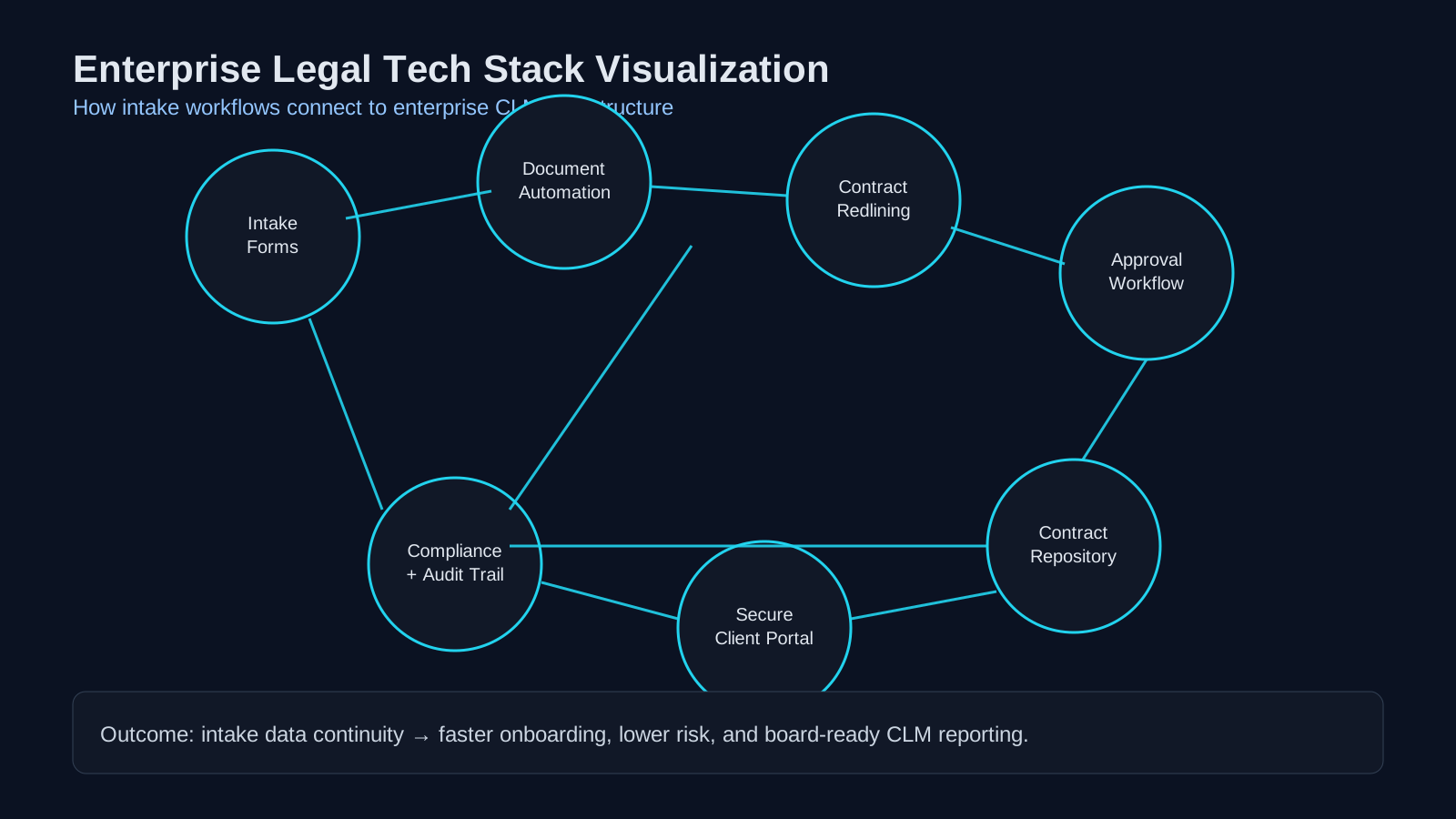
How Intake Systems Connect to Enterprise CLM Platforms
Legal departments increasingly treat intake data as the first stage of contract lifecycle management. Once client or matter information is captured, the next step often involves contract generation, negotiation, and approval workflows.
This is where intake tools intersect with the best enterprise CLM platform deployments.
Engagement Contracts as CLM Entry Points
Engagement letters are contracts. Once generated during intake, they enter a lifecycle that includes:
- Redlining during negotiation
- Internal approval workflows
- Electronic signature
- Contract storage and version control
Organizations using enterprise CLM systems can automatically push engagement agreements into contract repositories.
Data Synchronization
Structured intake data can populate contract templates inside CLM platforms. For example:
- Client name and entity structure
- Fee arrangements
- Jurisdiction and governing law
- Scope of representation
Automating this data transfer reduces manual drafting errors and ensures consistency across contracts.
Integration With Contract Analytics
Some firms connect intake workflows to contract analytics tools. These systems analyze engagement agreements and flag unusual provisions, helping risk teams monitor contractual exposure.
As legal departments adopt AI-driven contract review technology, intake data becomes even more valuable.
Practical Use Case: Integrating Client Intake With CLM Workflows
Consider a mid-size corporate law firm handling M&A transactions for private equity clients.
Step 1: Client Intake
A prospective client completes an intake form through the firm's website. The form collects:
- Corporate structure
- Transaction type
- Estimated deal size
- Jurisdiction
The intake system automatically routes the submission to the firm’s corporate practice group.
Step 2: Conflict Check
The platform cross-references the client and target company against existing matter databases. If no conflicts appear, the system proceeds to document generation.
Step 3: Engagement Letter Creation
Using document automation, the system generates an engagement agreement populated with the intake data.
Step 4: CLM Integration
The engagement agreement is automatically pushed into the firm’s enterprise CLM platform. From there:
- The client requests minor edits through redlining.
- Internal partners approve revised terms via approval workflows.
- The final contract is executed electronically.
Step 5: Contract Repository and Analytics
Once executed, the agreement is stored in the firm’s contract repository. Contract analytics tools extract key metadata, including billing terms and jurisdiction clauses.
This workflow demonstrates how intake systems now operate as the first stage of the contract lifecycle.
Security and Compliance Considerations
Client intake platforms handle sensitive information. Legal teams must evaluate security controls carefully.
SOC 2 Certification
SOC 2 compliance confirms that vendors maintain strict security and operational standards. Most enterprise-grade legal technology platforms now maintain SOC 2 Type II certification.
Data Encryption
Secure platforms encrypt data both in transit and at rest. TLS encryption protects client submissions, while server-side encryption secures stored documents.
Role-Based Access Controls
Firms should ensure intake data is accessible only to authorized staff. Role-based access controls limit visibility based on practice group or matter involvement.
The Strategic Role of Intake in the Legal Tech Stack
Client intake software is no longer a standalone administrative tool. It serves as the operational gateway for modern legal workflows.
When integrated with practice management systems, document automation platforms, and the best enterprise CLM platform, intake tools provide three strategic advantages:
- Operational efficiency – Automated intake reduces administrative overhead and improves matter onboarding speed.
- Risk reduction – Structured conflict checks and engagement documentation improve compliance.
- Data continuity – Intake information flows directly into downstream systems such as billing platforms and contract repositories.
As legal departments continue adopting AI-enabled contract analysis, automated redlining, and workflow orchestration, the intake stage will remain a critical foundation of the legal technology ecosystem.
Tools mentioned in this article
- Lawmatics — intake automation + CRM workflows for law firms.
- Clio Grow — onboarding, conflict checks, and engagement flow for Clio teams.
- IntakeQ — highly customizable intake questionnaires and workflow logic.
- Jotform — flexible form-first intake setup for rapid deployment.
- Typeform — conversational intake UX with branching logic.
FREE UPDATES
Get practical legal-tech updates (max 2 emails/month)
Receive new tool picks, category updates, and implementation tips. No spam. Unsubscribe anytime.
Educational content only. Not legal advice.