In 2026, legal operations performance is measured by cycle-time compression, predictable approvals, and leadership-ready reporting. Software choices should map directly to these outcomes.
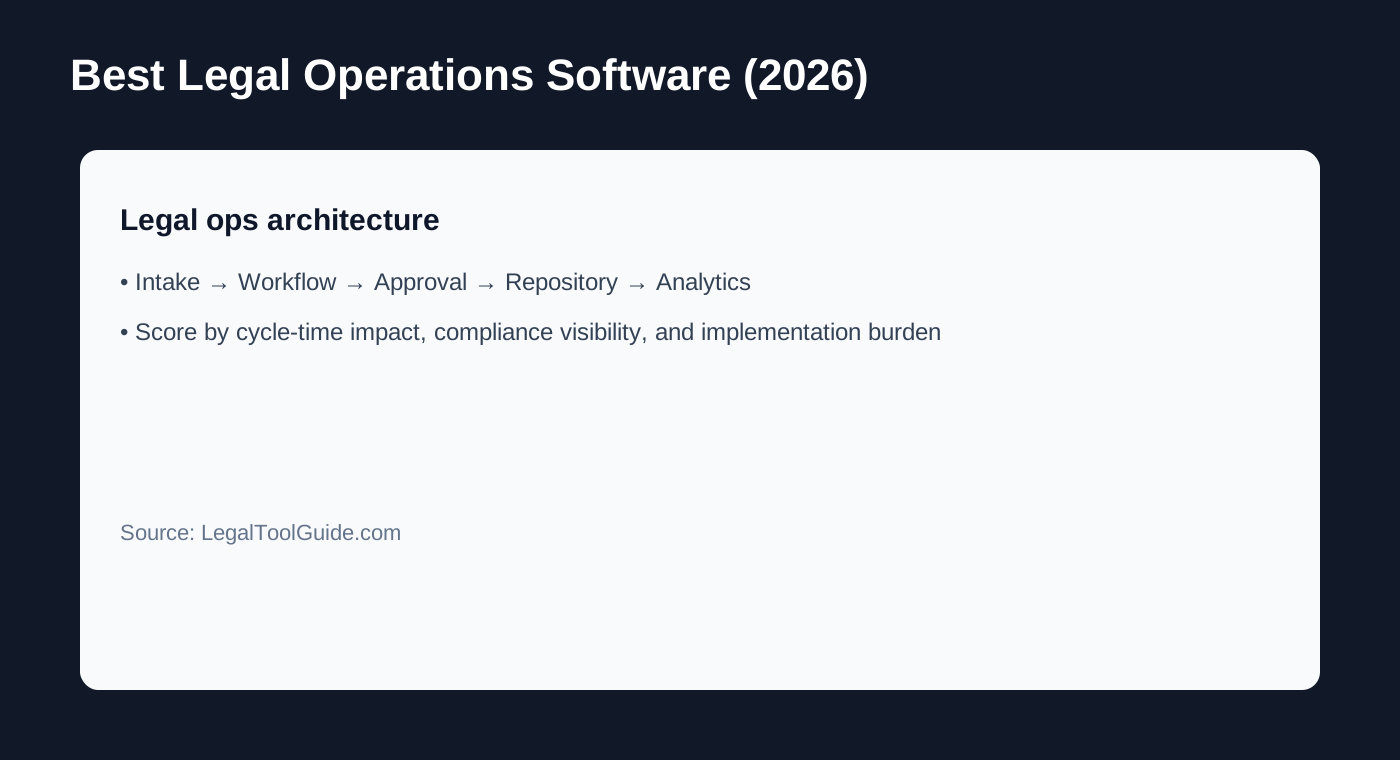
Executive Summary Table
| Stack layer | Primary function | Representative tools |
|---|---|---|
| Intake & triage | Capture and route legal requests | Lawmatics, IntakeQ, custom forms |
| Contract workflow | Drafting, redlining, approvals | Ironclad, DocuSign CLM, ContractPodAi |
| Repository & search | Contract visibility and retrieval | LinkSquares, iManage integrations |
| KPI reporting | Leadership metrics and forecasting | Databox, BI stack integrations |
How to evaluate legal ops software
- Workflow fit: Does software match real approval paths?
- Governance depth: Can you enforce policy and auditability?
- Integration burden: What is required to connect with core systems?
- Adoption risk: Will legal and business teams actually use it?
Implementation model (90 days)
Phase 1: stabilize one process and one KPI baseline. Phase 2: expand to second workflow. Phase 3: publish reporting and optimize bottlenecks. This prevents tool sprawl and preserves execution discipline.
This content is for educational purposes only and does not constitute legal advice. Always consult a qualified attorney.
Conclusion
The best legal operations software creates measurable operational control, not just prettier dashboards. Choose tools that improve throughput, governance, and reporting with realistic implementation effort.
Tools mentioned in this article
Related reads: Top 5 KPIs for Legal Operations Teams · Databox Review · Best Enterprise CLM Platforms