According to recent reporting by LawNext, legal research startup Descrybe has launched a legal reasoning tool and says it outperforms ChatGPT, Claude, and Gemini on a bar-exam benchmark. That is the kind of headline that can instantly attract legal-tech attention — especially from buyers already skeptical of broad consumer AI in high-stakes legal workflows.
The smarter reaction, however, is not instant excitement. It is structured verification. In legal AI, a benchmark can show capability under test conditions, but it does not automatically prove source reliability, jurisdictional precision, practical workflow fit, or safe failure behavior. Those are the traits that matter when a law firm or in-house team decides whether a tool deserves real trust.
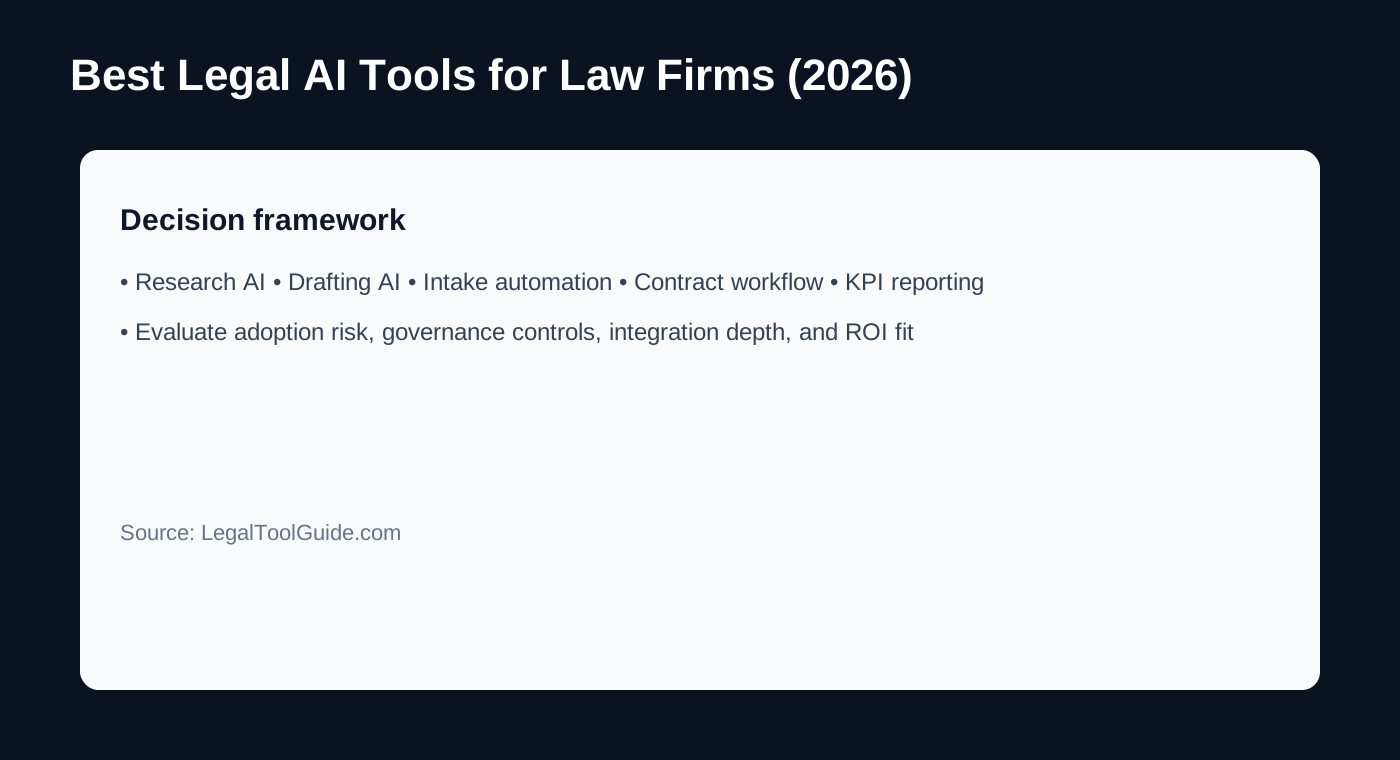
Quick take: Descrybe's claim is worth watching, but serious buyers should treat it as a prompt to test — not as a reason to trust blindly.
What happened
On the surface, the story is straightforward. Descrybe launched a legal reasoning tool and attached the launch to a strong comparison claim: that it beats major general-purpose AI systems on a bar-exam benchmark. For a crowded legal AI market, that is a logical positioning move. Buyers want evidence that legal-specific systems are not just wrappers around generic chat models, but products with real domain advantage.
That is why the story matters. It reflects a broader market shift. Legal buyers are moving away from asking whether AI can help at all, and toward a more demanding question: which AI systems deserve a place inside professional legal workflows?
Independent analysis note
This article is based on public reporting and source materials. We have not independently verified every vendor claim or conducted a live product test of Descrybe. The purpose here is to help legal buyers interpret the announcement intelligently, not to present the claim as established fact.
Why this launch matters in the legal AI market
General-purpose AI has already changed expectations inside legal teams, but it has also exposed the limits of broad models in legal contexts. The biggest buyer concerns are familiar: citation confidence, source visibility, controllable reasoning, and whether the product helps a legal team work faster without creating new review risk.
That is exactly why legal-native positioning matters. If a legal reasoning tool can genuinely outperform broad AI in legal tasks, that is commercially meaningful. But buyers should remember that market significance and procurement readiness are not the same thing.
| Question buyers should ask | Why it matters | What a benchmark alone cannot prove |
|---|---|---|
| Does the tool reason well? | Core product promise | Whether the reasoning is reliable across messy real prompts |
| Can users verify sources? | Critical for legal review and defensibility | That citations are complete, accurate, and practical to inspect |
| Will it fit an existing workflow? | Adoption depends on process integration | That the product actually reduces operational friction |
| How does it behave when uncertain? | Failure mode often matters more than demo quality | Whether it fails safely or confidently overstates certainty |

What a bar-exam benchmark may prove
A benchmark result can still be useful. It may suggest the tool performs well on structured legal reasoning tasks. It may also indicate that the product team has built something more focused than a general chatbot with legal prompting on top. That is not meaningless. In fact, it may be one of the first signals that a legal-specific product deserves attention.
- It may show strong issue spotting under test conditions.
- It may indicate better legal framing than broad consumer AI.
- It may suggest the system is trained or structured with legal tasks in mind.
- It may justify a closer buyer-side evaluation.
What the benchmark definitely does not prove
This is where legal buyers need discipline. A benchmark does not prove that the tool is superior in real legal research. It does not prove that cited authorities are dependable. It does not prove that the system handles different jurisdictions well. It does not prove that the product fits the workflow of a litigation team, an in-house legal department, or a legal operations function.
Most importantly, it does not prove operational trustworthiness. Legal work is rarely neat. Prompts are ambiguous. Facts arrive incomplete. Authority can conflict. Review discipline matters. The best legal AI products are not just the ones that can answer exam-like questions well — they are the ones that remain useful, inspectable, and safe when the work gets messy.
Seven things legal buyers should verify before trusting the claim
- Source transparency: Are the underlying authorities visible, inspectable, and tied clearly to the output?
- Jurisdiction coverage: Where does the tool perform well, and where does it become vague or risky?
- Real prompt behavior: How does it handle incomplete facts, ambiguity, and poorly framed user input?
- Failure mode: Does it signal uncertainty well, or does it produce polished but overconfident answers?
- Workflow fit: Does it save time inside research, drafting, intake, or review — or simply move the work elsewhere?
- Auditability: Can a lawyer or legal ops lead reasonably review what happened and why?
- Implementation friction: How difficult is rollout, adoption, training, governance, and internal buy-in?
Law firms evaluating legal research AI, in-house teams building safer AI workflows, and legal ops leaders comparing legal-specific tools with general-purpose AI.
A benchmark headline, a product demo, or a vendor comparison chart without live internal testing.
Run scenario-based testing with real prompts, review criteria, and known source-verification standards.
Where Descrybe could genuinely stand out
If Descrybe delivers on its claim in practice, the product could stand out in a market that increasingly wants legal-specific reasoning rather than broad AI fluency. Many buyers no longer want the widest possible model. They want the most controllable one — especially if it is paired with stronger source handling and better workflow discipline.
That could make Descrybe genuinely interesting for teams that are tired of forcing generic AI into legal work it was not designed for. But the word here is still if. That advantage has to be proven in real use, not just stated in launch messaging.
A better LegalToolGuide evaluation framework
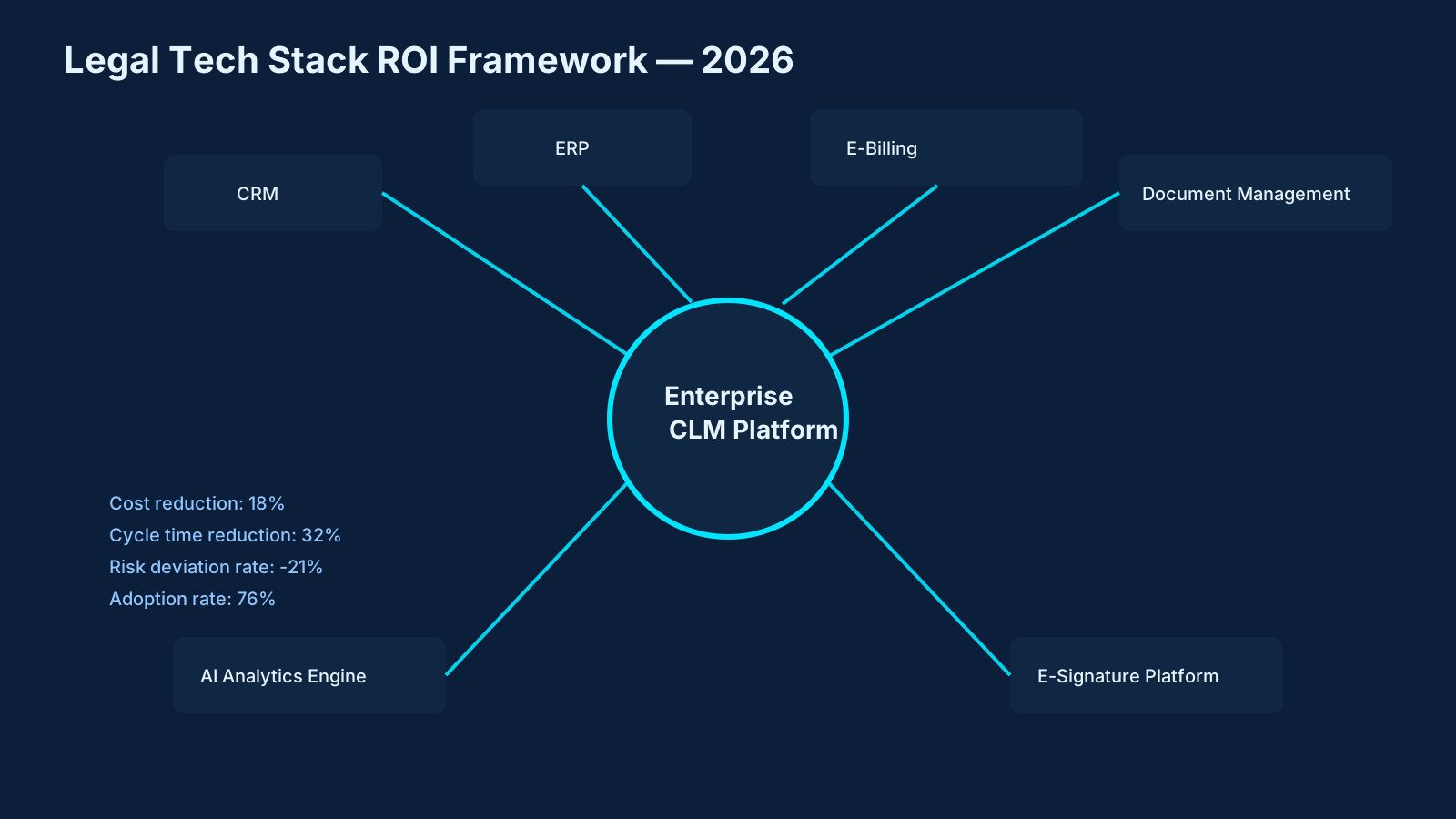
At LegalToolGuide, the more useful question is not, Did this tool beat a famous model on one benchmark? The better question is, What kind of legal trust does this product earn in actual use?
We recommend a five-part evaluation lens for legal AI research products:
- Legal reasoning quality — Does the output show useful issue framing and legal structure?
- Source reliability — Can the user confirm where the answer comes from?
- Workflow fit — Does it reduce friction in an actual process?
- Explainability — Can professionals follow and review the logic responsibly?
- Risk behavior — Does the tool stay appropriately bounded when uncertain?
Bottom line
Descrybe's launch is worth watching. A legal reasoning tool that can genuinely outperform broad AI systems in legal tasks would be meaningful for the market. But legal buyers should not confuse an interesting benchmark claim with a finished trust case.
The right response is disciplined curiosity: pay attention, verify carefully, and evaluate the product as a workflow tool — not just as a headline.
Our methodology for this article
This article applies LegalToolGuide's standard decision-support lens for legal technology content: identify the claim, separate product promise from workflow proof, and translate the launch into practical questions buyers should ask before they trust or deploy anything. We prioritized source clarity, legal-risk framing, and real buyer decision value over hype amplification.
Sources
- LawNext: AI Legal Research Startup Descrybe Launches Legal Reasoning Tool, Says It Outperforms ChatGPT, Claude and Gemini on Bar Exam Benchmark
- Descrybe: Add the primary product or company announcement in the final refresh cycle if a stable launch page is publicly available and materially expands on the claim.
- Internal evaluation logic: LegalToolGuide editorial framework for legal AI buyer guidance, workflow fit, and risk-aware legal-tech analysis.
FAQ
Should law firms trust benchmark claims from legal AI vendors?
No benchmark claim should be trusted blindly. It can be a useful signal, but firms still need live testing, source verification, and workflow-based review before relying on the tool operationally.
Does outperforming ChatGPT or Claude on a legal benchmark prove a tool is better?
Not necessarily. It may indicate stronger performance in one test environment, but it does not automatically prove better research reliability, safer failure behavior, or stronger fit inside a professional legal workflow.
What should legal ops teams test first?
Start with source visibility, real prompt handling, workflow friction, and how the system behaves when it does not know the answer. Those are often more important than a launch benchmark.