Divorce litigation increasingly involves digital evidence. Bank records, payment platforms, shared cloud folders, and even social media posts can become part of discovery. When a divorce becomes contentious, protecting financial privacy is not simply about secrecy—it is about maintaining legal control over sensitive financial data while ensuring that disclosures occur through proper legal channels.
Courts require transparency in asset disclosure, but that does not mean every financial detail should circulate informally through email threads, unsecured messaging apps, or shared family devices. A disciplined approach to digital privacy helps prevent financial documents from being misused, misinterpreted, or publicly exposed during proceedings.
The following guide explains how individuals can protect financial privacy while complying with legal disclosure requirements during a high-conflict divorce.

Executive Summary
| Topic | Key Takeaway | Practical Action |
|---|---|---|
| Digital Financial Exposure | Financial records now exist across banking apps, cloud drives, and social platforms | Audit accounts and restrict access immediately |
| Secure Document Handling | Sensitive documents often circulate through insecure channels | Use encrypted document portals such as ShareFile |
| Social Media Evidence | Posts can reveal assets, purchases, and spending habits | Reduce posting and review historical activity |
| Discovery Process | Courts require disclosure but not uncontrolled distribution | Share documents only through attorney-managed systems |
| Device Security | Shared devices can expose passwords and statements | Change credentials and enable two-factor authentication |
| Professional Coordination | Lawyers increasingly rely on secure legal tech tools | Follow structured workflows for evidence sharing |
Why Financial Privacy Matters During Divorce
Divorce proceedings require both spouses to disclose assets, liabilities, income, and expenses. Courts rely on this transparency to divide marital property fairly. However, the disclosure process also creates risks.
Financial information can include:
- Investment account balances
- Business ownership documents
- Cryptocurrency wallets
- Tax returns
- Bank statements
- Loan agreements
- Insurance policies
When these materials circulate outside formal discovery channels, several problems can arise:
- Misinterpretation of partial records. A single statement without context can distort a financial narrative.
- Unauthorized distribution. Screenshots or forwarded documents may spread beyond legal teams.
- Strategic misuse. Opposing counsel may exploit improperly shared information.
Maintaining financial privacy does not mean hiding assets. It means ensuring that disclosures occur through controlled legal processes.
Conduct a Financial Privacy Audit
The first step is identifying where financial information currently exists.
Many individuals underestimate how widely their financial data is distributed across digital platforms.
Common Sources of Financial Exposure
- Online banking and investment dashboards
- Accounting software
- Shared cloud storage (Google Drive, Dropbox)
- Email attachments containing tax records
- Budgeting apps
- Payment platforms such as PayPal or Venmo
- Cryptocurrency exchanges
- Business accounting systems
Immediate Security Measures
Take the following steps early in the divorce process:
- Change passwords for all financial accounts
- Enable two-factor authentication
- Remove shared device logins
- Disable automatic email forwarding rules
- Review account recovery methods tied to shared phone numbers
These actions establish baseline control over financial records before discovery begins.
Separate Personal and Shared Financial Systems
Contentious divorces often reveal that spouses still share access to multiple financial systems. Even if both parties previously used a shared household login, continuing that arrangement during litigation creates unnecessary risk.
Establish Individual Financial Accounts
Consider the following structural changes:
- Create a new personal email address dedicated to financial communications
- Open individual checking accounts for post-separation income
- Move document storage to private encrypted folders
- Separate personal subscriptions from family accounts
Courts generally permit spouses to create independent financial infrastructure after separation, provided that assets remain fully disclosed during proceedings.
Control How Financial Documents Are Shared
One of the most common privacy failures occurs when sensitive records are transmitted through informal communication channels.
Examples include:
- Emailing tax returns as attachments
- Sending bank statements through messaging apps
- Uploading documents to shared cloud folders
These practices make it difficult to control who ultimately accesses the data.
Secure Document Transfer
Modern legal workflows increasingly rely on encrypted document exchange platforms designed for confidential materials. For example, platforms like ShareFile allow individuals to upload financial records through secure portals that attorneys can access without exposing files through unsecured email threads.
Key security features typically include:
- End-to-end encryption
- Controlled access permissions
- Secure download tracking
- Audit trails showing who accessed documents
- Temporary links that expire automatically
This approach ensures financial information flows through structured legal channels rather than informal communication.
Practical Use Case: Securely Sharing Financial Evidence
Consider a common scenario during divorce discovery.
A spouse’s attorney requests several years of financial records, including:
- Tax returns
- Brokerage account statements
- Business income reports
- Loan documentation
Instead of emailing dozens of attachments, the individual uploads the documents to a secure workspace using ShareFile. The attorney receives access to the encrypted folder, reviews the materials, and selectively shares them with opposing counsel during discovery.
This workflow provides several advantages:
- Documents remain organized in a single secure location
- Access can be revoked if needed
- File activity is logged for accountability
- Sensitive financial information avoids exposure through unsecured email systems
For individuals navigating emotionally charged litigation, structured document exchange dramatically reduces the risk of privacy violations.
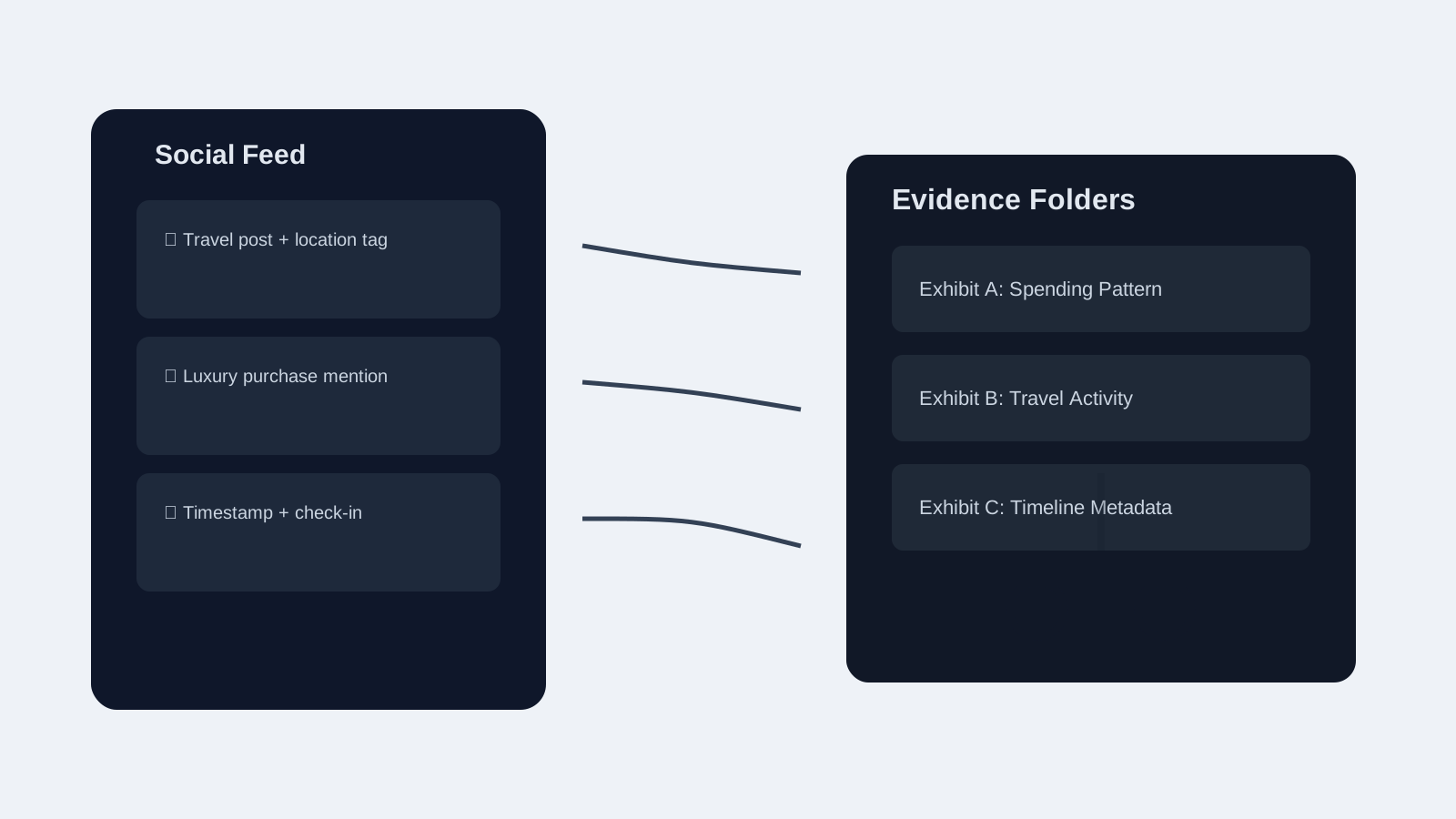
Social Media Can Reveal Financial Evidence
While social media posts may appear unrelated to finances, courts increasingly rely on digital activity to evaluate financial credibility.
Images, check-ins, and casual posts can contradict financial claims.
Examples include:
- Posting vacation photos while claiming financial hardship
- Showing luxury purchases while reporting limited income
- Displaying business activity inconsistent with financial disclosures
These posts may become evidence in litigation.
Relationship to Broader Evidence Trends
Digital evidence plays an expanding role in litigation generally. In personal injury cases, for example, courts routinely examine social media evidence personal injury claims to verify whether plaintiffs’ online activity contradicts alleged injuries.
The same principle applies during divorce: social media activity can reveal spending patterns, assets, or undeclared income streams.
Practical Guidelines
To reduce risk:
- Avoid posting about financial purchases
- Disable location tagging for travel or events
- Review historical posts for financial disclosures
- Avoid discussing litigation online
Even private posts may become discoverable if they relate to financial matters.
Protect Business Financial Records
Divorce becomes significantly more complex when one spouse owns or operates a business.
Business financial data may include:
- Payroll records
- Vendor contracts
- Internal financial statements
- Investor agreements
- Customer revenue data
These materials often contain confidential information unrelated to the divorce.
Maintain Business Confidentiality
Business owners should coordinate with legal counsel to:
- Redact proprietary information where appropriate
- Limit disclosure to required financial summaries
- Use secure document portals for business financials
Secure transfer platforms such as ShareFile can help separate personal disclosure obligations from broader business data protection.
This distinction protects both the company and third parties whose data may appear in financial documents.
Avoid Informal Financial Conversations
Contentious divorces often involve emotional communication between spouses. Financial discussions conducted through text messages or social media messages can quickly become evidence.
Examples include:
- Negotiating asset divisions through text messages
- Arguing about financial transactions
- Sending screenshots of account balances
These conversations frequently appear in court filings.
Establish a Controlled Communication Structure
Attorneys typically recommend:
- Routing financial discussions through legal counsel
- Documenting asset disclosures through formal channels
- Avoiding direct negotiation over financial matters via messaging apps
This approach reduces both evidentiary risks and emotional escalation.
Understand the Discovery Process
Financial privacy does not override legal disclosure obligations.
Courts require both spouses to produce financial documentation during discovery. Attempting to conceal assets can lead to serious legal consequences.
However, discovery follows structured procedures designed to protect confidentiality.
Typical Financial Discovery Requests
Courts may require disclosure of:
- Bank account statements
- Retirement accounts
- Credit card statements
- Business ownership records
- Real estate documentation
- Tax returns
These documents typically move through attorney-managed exchanges, often using secure document repositories or encrypted transfer platforms.
Technology Pressures in Modern Legal Practice
By 2026, law firms face growing pressure to adopt secure digital workflows while controlling costs.
Several factors shape modern legal practice:
- Flat client budgets limit manual document management
- Client resistance to hourly billing encourages efficient tech adoption
- Data security concerns require encrypted document systems
- Remote collaboration increases reliance on secure file-sharing tools
Legal technology platforms that support encrypted document exchange, access tracking, and secure storage have become standard components of many firms’ legal technology stacks.
For individuals involved in divorce litigation, these systems provide a safer alternative to traditional email attachments and shared folders.
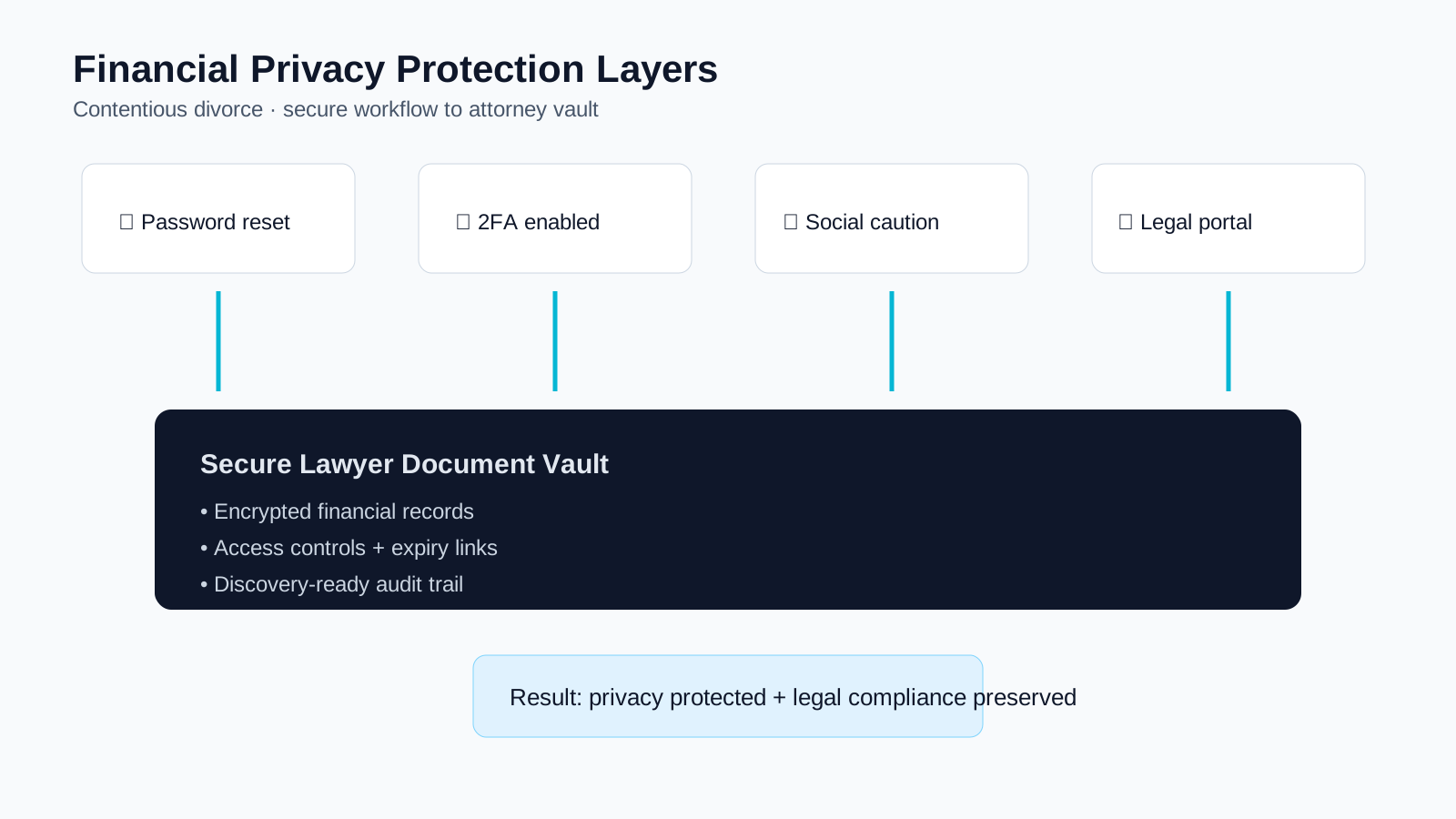
Final Checklist for Protecting Financial Privacy
A structured privacy strategy can significantly reduce risk during a contentious divorce.
Financial Privacy Checklist
Account Security
- Change passwords for all financial accounts
- Enable two-factor authentication
- Remove shared devices from account access lists
Document Control
- Store financial documents in encrypted repositories
- Avoid sending financial records through email attachments
- Use secure document portals for legal sharing
Social Media Discipline
- Reduce posting about spending or travel
- Review previous posts for financial disclosures
- Avoid discussing litigation online
Legal Coordination
- Share documents through attorney-approved systems
- Follow structured discovery procedures
- Maintain accurate financial disclosures
Divorce proceedings often involve heightened emotions and significant financial stakes. A careful approach to digital privacy ensures that sensitive financial information remains protected while still meeting legal obligations.
Managing financial disclosure through secure systems, disciplined communication, and controlled document workflows helps individuals navigate litigation without exposing personal financial data to unnecessary risk.
Tools mentioned in this article
FREE UPDATES
Get practical legal-tech updates (max 2 emails/month)
Receive new tool picks, category updates, and implementation tips. No spam. Unsubscribe anytime.
Educational content only. Not legal advice.