The conversation has shifted from activity metrics to outcome-based measurement. General counsel want defensible data that demonstrates cost control, cycle-time compression, risk mitigation, and measurable business enablement. The right legal operations KPIs translate legal work into board-level language.
Below is a structured executive summary of the five most consequential KPIs for legal operations teams in 2026.

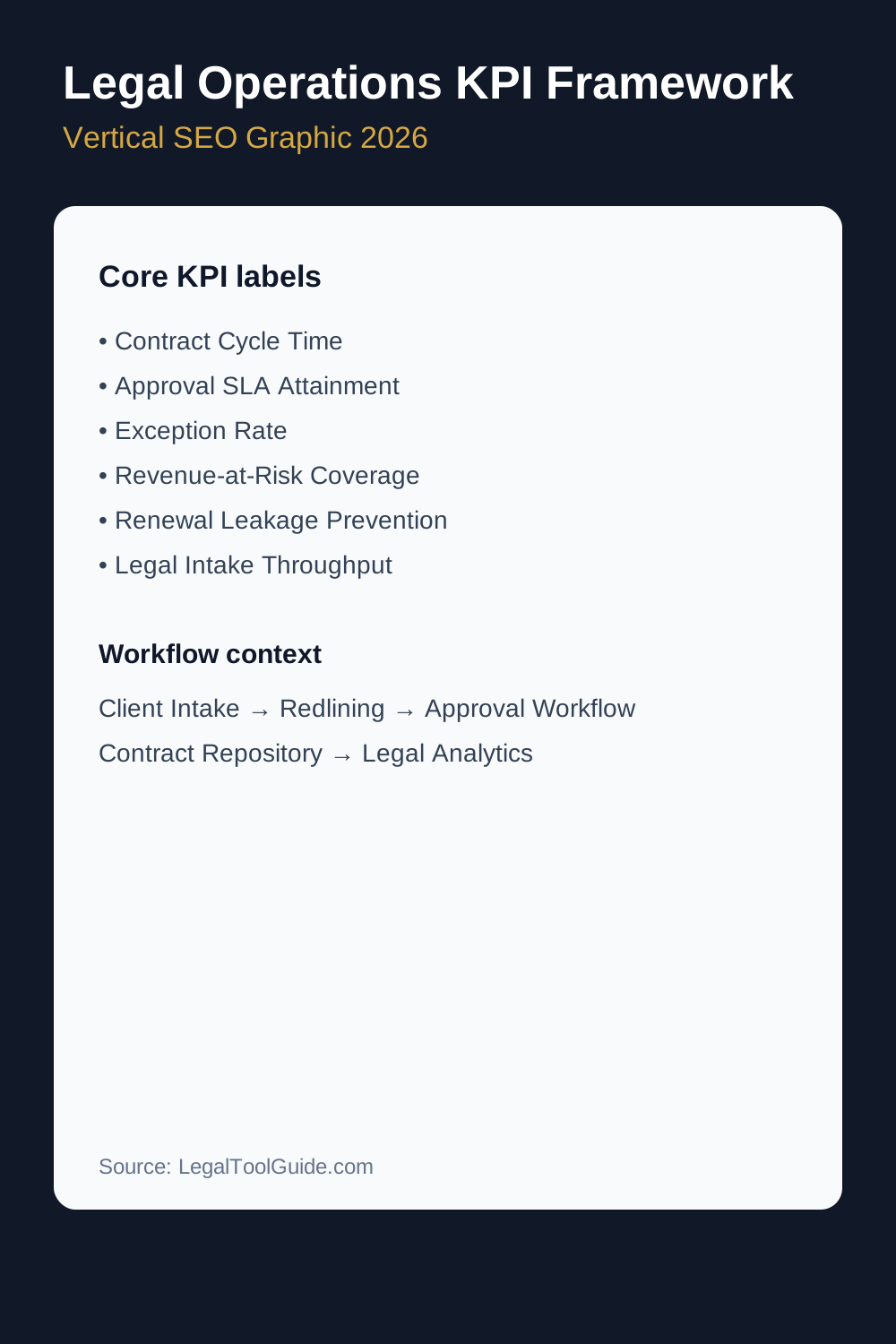
Executive Summary: Top Legal Operations KPIs (2026)
| KPI | What It Measures | Why It Matters in 2026 | Supporting Systems |
|---|---|---|---|
| 1. Contract Cycle Time | Average time from intake to signature | Revenue velocity and business enablement | Enterprise CLM, workflow automation |
| 2. Outside Counsel Spend Efficiency | Cost per matter vs. outcome benchmarks | Budget discipline amid flat spend | E-billing, matter management |
| 3. AI-Assisted Productivity Ratio | Percentage of legal work augmented by AI | Secure adoption of AI without risk exposure | AI contract review, document analytics |
| 4. Risk Mitigation & Compliance Score | Clause deviation rates, audit readiness | Regulatory scrutiny and SOC 2 expectations | CLM, audit tracking tools |
| 5. Legal Tech Stack ROI | Utilization vs. license cost and time savings | CFO-level justification of tech investments | Integrated legal tech platforms |
1. Contract Cycle Time: Measuring Business Enablement
Contract cycle time remains the most visible performance indicator for legal operations teams. In revenue-generating functions—sales, procurement, partnerships—legal bottlenecks directly impact growth.
What to Measure
- Average days from intake to execution
- Time spent in redlining and negotiation
- Approval workflow duration
- Percentage of contracts completed within SLA
In 2026, executives no longer accept anecdotal explanations for delays. They expect granular reporting segmented by contract type (NDAs, MSAs, SaaS agreements), business unit, and geography.
Why It Matters
Contract velocity correlates with revenue recognition. A 20% reduction in approval workflow lag often translates into measurable improvements in sales close rates. Legal operations teams that control version control issues, eliminate email-based redlining, and automate playbook-driven clause fallback materially accelerate time to signature.
Technology Enablement
The best enterprise CLM platform centralizes intake, automates approval routing, enforces clause libraries, and maintains audit-ready version control. Integration with CRM and procurement tools ensures seamless tech stack integration.
For teams seeking AI-assisted contract intake classification and automated risk flagging, platforms such as Streamline AI provide practical automation layers. A B2B use case:
- Sales uploads inbound customer paper.
- The AI engine extracts key clauses.
- The system compares deviations against pre-approved fallback positions.
- Redline suggestions are generated.
- Approval workflows route automatically to finance or security for non-standard data processing terms.
Legal operations can then measure cycle time reductions pre- and post-implementation, demonstrating operational impact.
2. Outside Counsel Spend Efficiency: Controlling External Costs
Flat budgets define 2026. CFOs expect legal departments to justify every external dollar spent.
Core Metrics
- Cost per matter by matter type
- Spend vs. budget variance
- Outcome-based cost benchmarking
- Alternative fee arrangement adoption rate
- Invoice compliance rate
Legal operations KPIs in this category extend beyond raw spend totals. Mature teams benchmark cost per litigation, regulatory review, or M&A diligence against historical data and peer averages.
Advanced Performance Indicators
High-performing departments analyze:
- Timekeeper mix efficiency (partner vs. associate ratio)
- Invoice rejection rates through automated e-billing rules
- Success metrics tied to cost outcomes
Procurement scrutiny means firms must push toward capped fees and value-based billing structures. Legal ops teams that rely on matter management systems with embedded spend analytics gain predictive insight into cost overruns before they materialize.
Operational Implications
External counsel performance reviews increasingly incorporate data-backed evaluations rather than anecdotal feedback. Legal ops must produce quarterly dashboards summarizing:
- Spend per business unit
- Litigation reserve trends
- Budget-to-actual tracking
This KPI shifts legal from reactive cost center to disciplined financial steward.

3. AI-Assisted Productivity Ratio: Measuring Secure Innovation
The adoption of AI across legal departments has accelerated, but executive leadership insists on governance. Boards demand proof that AI deployment aligns with data privacy obligations, SOC 2 compliance requirements, and internal information security standards.
Defining the KPI
AI-Assisted Productivity Ratio measures:
- Percentage of contracts reviewed using AI augmentation
- Time saved per document
- Reduction in manual clause extraction
- Accuracy rates vs. manual review
Rather than tracking generic “AI usage,” legal operations leaders measure output efficiency. If contract review time drops from 90 minutes to 40 minutes while maintaining accuracy, the ratio becomes quantifiable.
Why It Matters
Client pushback on hourly billing forces internal efficiency. Legal departments cannot scale headcount proportionally to workload growth. AI becomes a multiplier.
However, ungoverned AI introduces risk. Legal ops must ensure:
- Data residency controls
- Secure API integrations
- Role-based access permissions
- Audit logs for document handling
Tools like Streamline AI demonstrate how AI-driven contract analytics can be embedded within a compliant workflow.
Practical B2B Scenario:
A procurement team uploads 300 vendor agreements during a quarterly onboarding cycle. Streamline AI automatically:
- Extracts indemnity, limitation of liability, and data protection clauses
- Flags non-standard language
- Scores risk deviation
- Generates structured reports for leadership
Legal operations can then report AI-assisted throughput gains, quantifying cost avoidance and time savings.
4. Risk Mitigation & Compliance Score: From Reactive to Predictive
Risk management metrics are central to board reporting. Legal teams are now expected to provide forward-looking risk assessments rather than retrospective incident summaries.
Measurable Components
- Percentage of contracts using approved clause language
- Clause deviation rate from standard templates
- Audit readiness score
- Regulatory response turnaround time
- Data processing agreement compliance rate
Enterprise CLM systems with embedded clause libraries allow legal operations to measure fallback clause adoption. If 85% of executed agreements use approved limitation-of-liability language, risk exposure decreases.
Compliance and SOC 2 Alignment
Organizations undergoing SOC 2 audits require documented access controls, vendor management tracking, and version history integrity.
Key questions include:
- Are contract repositories encrypted at rest and in transit?
- Is version control auditable?
- Are approval workflows documented and exportable?
These data points translate into measurable compliance indicators.
Strategic Value
Risk KPIs elevate legal from defensive posture to predictive risk partner. If deviation rates trend upward in a particular geography or contract type, legal operations can intervene early with playbook revisions or training initiatives.

5. Legal Tech Stack ROI: Justifying the Investment
Legal technology budgets have grown over the past decade, but CFO tolerance for underutilized tools has declined sharply.
Core Measurements
- User adoption rates
- Active vs. licensed users
- Reduction in manual tasks
- Time-to-value post-implementation
- Cost per automated workflow
The best enterprise CLM platform cannot justify its subscription cost without measurable performance improvements.
Measuring True ROI
Legal operations should quantify:
- Contract cycle time reduction percentage
- Reduction in outside counsel review hours
- Elimination of duplicate systems
- Decrease in compliance audit preparation time
For example, if automated redlining reduces external review hours by 30%, the savings may offset licensing fees within a fiscal year.
Integration as a Multiplier
Tech stack integration determines ROI sustainability. Platforms must integrate with:
- CRM systems
- ERP platforms
- E-signature providers
- Document management systems
Disconnected tools generate data silos, undermining KPI measurement accuracy.
Building a Cohesive KPI Framework
The five KPIs above function best as an integrated dashboard rather than isolated metrics. Legal operations leaders should design quarterly reporting structures that connect:
- Contract velocity
- Spend control
- AI efficiency
- Risk exposure
- Technology ROI
When presented together, these indicators demonstrate how legal contributes to enterprise value creation.
For teams standardizing executive reporting, KPI dashboard platforms such as Databox can consolidate legal, revenue, and operations metrics into one board-ready view.
Governance Considerations
Legal departments must also establish:
- Data integrity protocols
- Defined metric ownership
- Quarterly recalibration of benchmarks
- Transparent reporting methodologies
Boards increasingly question how metrics are calculated. Clear definitions prevent internal disputes over performance interpretation.
2026 Market Realities Shaping KPI Strategy
Three structural pressures define KPI prioritization:
1. Budget Constraints
Legal departments rarely receive expanded budgets. Efficiency metrics must demonstrate cost neutrality or savings.
2. Billing Model Evolution
Clients resist open-ended hourly structures. Internal productivity improvements protect margins.
3. Secure AI Mandates
Adoption must align with security certifications, access control policies, and compliance frameworks.
Conclusion: From Metrics to Strategic Influence
Legal operations teams in 2026 no longer justify their existence through process improvement rhetoric. They present data.
Contract cycle time shows business enablement. Spend efficiency demonstrates fiscal discipline. AI productivity ratios quantify innovation. Risk scores reflect governance strength. Tech stack ROI validates investment decisions.
Together, these legal operations KPIs transform the department into a measurable, accountable, and strategically aligned function.
The organizations that invest in structured measurement—and leverage secure, integrated systems such as the Streamline AI platform within a broader enterprise architecture—position legal operations not merely as support infrastructure, but as a data-driven driver of enterprise performance.
For general counsel seeking the best enterprise CLM platform, the evaluation criteria should begin and end with one question: does the system produce reliable, actionable metrics that withstand board-level scrutiny?
In 2026, success belongs to legal operations teams that can answer that question with evidence.
Tools mentioned in this article
- Streamline AI — AI support for contract intake, clause extraction, and KPI-driven legal ops reporting. View tool
- Databox — KPI dashboard and reporting layer for legal operations, growth, and executive performance tracking. View tool
FREE UPDATES
Get practical legal-tech updates (max 2 emails/month)
Receive new tool picks, category updates, and implementation tips. No spam. Unsubscribe anytime.
Educational content only. Not legal advice.