CLM is often mistaken for a document repository. In reality, it is an operating layer that governs how contracts are requested, drafted, reviewed, approved, signed, stored, and monitored. Without CLM, teams rely on email chains and local files; with CLM, they run a controlled workflow.
Executive Summary
| Topic | Quick answer |
|---|---|
| What is CLM? | A system to manage contracts end-to-end with governance controls. |
| Who needs it? | Legal ops, in-house legal, procurement, sales ops, and finance-heavy organizations. |
| Main outcomes | Faster cycle times, better compliance, stronger reporting, lower process risk. |
| Biggest implementation risk | Trying to automate chaos before defining process and metadata rules. |
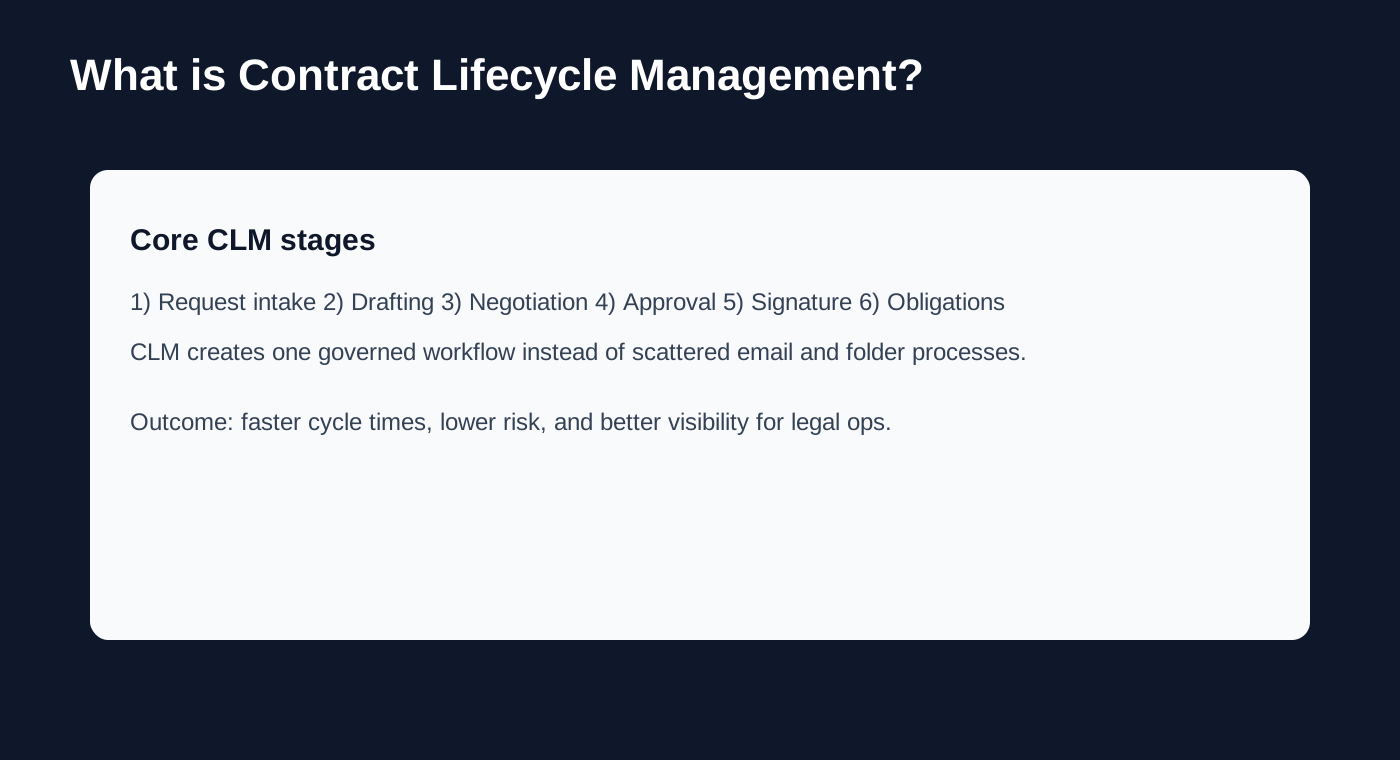
Core CLM stages explained
1) Request intake
Stakeholders submit structured requests instead of informal email asks. Intake captures business context and urgency up front.
2) Drafting and templates
Approved templates and clause libraries reduce manual drafting variability and improve legal consistency.
3) Negotiation and redlining
CLM creates a controlled redline environment, preserving version history and decision traceability.
4) Approvals and governance
Policy thresholds route contracts to the right approvers automatically, with audit trails for risk and compliance.
5) Signature and execution
Integrated e-signature closes the loop faster and avoids copy mismatch between final redline and signed version.
6) Obligation and renewal management
Post-signature obligations, renewal dates, and KPI reporting convert contracts from static files into managed assets.
Implementation insights
Successful CLM programs start with one contract family, one approval policy, and one measurable KPI set. Scale comes after behavior stabilizes.
- Start with highest-volume contract type first.
- Define metadata before automation.
- Track fallback-to-email as adoption risk signal.
This content is for educational purposes only and does not constitute legal advice. Always consult a qualified attorney.
Conclusion
CLM is not just software; it is legal operating design. Teams that treat it as a workflow program, not a template project, achieve materially better outcomes in speed, governance, and reporting.
Tools mentioned in this article
Related: Best Enterprise CLM Platforms (2026 Guide) · Best Contract Workflow Tools for Law Firms