Personal injury litigation increasingly turns on digital evidence. Insurance carriers, defense counsel, and litigation-support teams routinely analyze a claimant’s social media history to test the credibility of injury allegations, assess damages claims, and identify contradictory behavior. Photographs, location check-ins, fitness data, and casual posts often become discoverable evidence.
For plaintiffs and their attorneys, this reality introduces a significant strategic risk. A single social media post can undermine months of medical documentation or deposition testimony. At the same time, law firms and litigation-support teams must manage enormous volumes of digital evidence, including social media archives, smartphone data, and communication logs.
The discipline required to manage this evidence—collection, preservation, and analysis—now intersects with enterprise legal technology platforms that support eDiscovery, contract governance, and litigation workflows.
Executive Summary
| Key Issue | Why It Matters | Risk Level | Mitigation Strategy |
|---|---|---|---|
| Social media discoverability | Courts increasingly allow social media content in personal injury litigation | High | Implement strict client communication protocols and digital preservation policies |
| Contradictory online activity | Posts showing physical activity can contradict injury claims | High | Attorneys should advise clients to suspend nonessential social media activity |
| Metadata and geolocation | Time stamps and location data can reconstruct timelines | Medium–High | Use forensic-grade collection tools and structured review workflows |
| Third-party tagging | Friends’ posts can reveal activities even if the claimant does not post | Medium | Monitor discoverable digital associations during litigation |
| Enterprise evidence review | Litigation teams must process large volumes of digital records | Medium | Use scalable review platforms such as RelativityOne to analyze evidence efficiently |
Why Social Media Evidence Matters in Personal Injury Litigation
Courts across the United States increasingly recognize social media content as admissible evidence when it is relevant to a party’s claims or defenses. For personal injury plaintiffs, the issue often centers on credibility. If a claimant alleges severe mobility limitations but posts photos from recreational activities, the defense will likely argue that the injuries are exaggerated.
Insurance carriers have invested heavily in digital investigation teams. These teams routinely review:
- Public social media profiles
- Tagged photos and videos
- Location check-ins and event attendance
- Activity data from fitness applications
- Archived posts obtained through discovery
Even seemingly benign content can become damaging in litigation. A photograph taken months before an accident may appear to contradict testimony if it lacks context. Similarly, a sarcastic caption or exaggerated joke may be interpreted literally by opposing counsel.
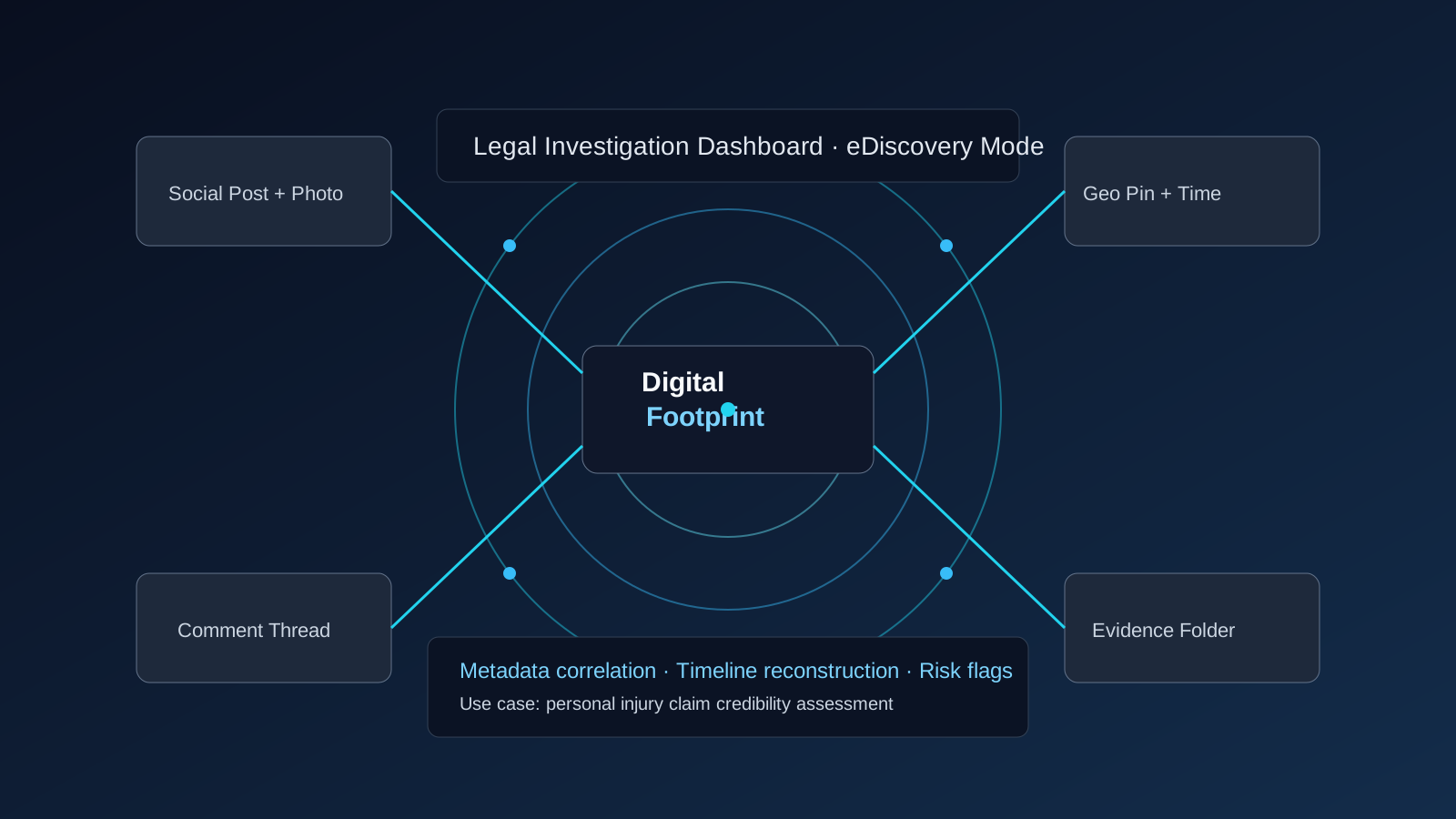
The result is a litigation environment where a claimant’s digital footprint functions as an informal surveillance record.
Common Types of Social Media Evidence Used Against Plaintiffs
Photographs and Videos
Visual content presents the most obvious litigation risk. Images showing physical activity—sports, travel, exercise, or social events—can be used to challenge allegations of physical impairment.
Defense counsel frequently highlight posts that show:
- Physical exertion inconsistent with medical restrictions
- Recreational activities during recovery periods
- Travel or social participation suggesting a normal lifestyle
Even when the activity occurs outside the claimed injury period, defense attorneys may argue that the claimant’s physical capacity contradicts medical testimony.
Status Updates and Text Posts
Written posts can also undermine injury claims. Statements describing daily activities, emotional well-being, or physical condition may conflict with statements made in depositions or medical records.
Examples include:
- Posts describing workouts or recreational outings
- Complaints unrelated to the claimed injury
- Statements implying the accident had limited impact
Courts often treat these posts as party admissions, making them difficult to challenge once discovered.
Geolocation and Metadata
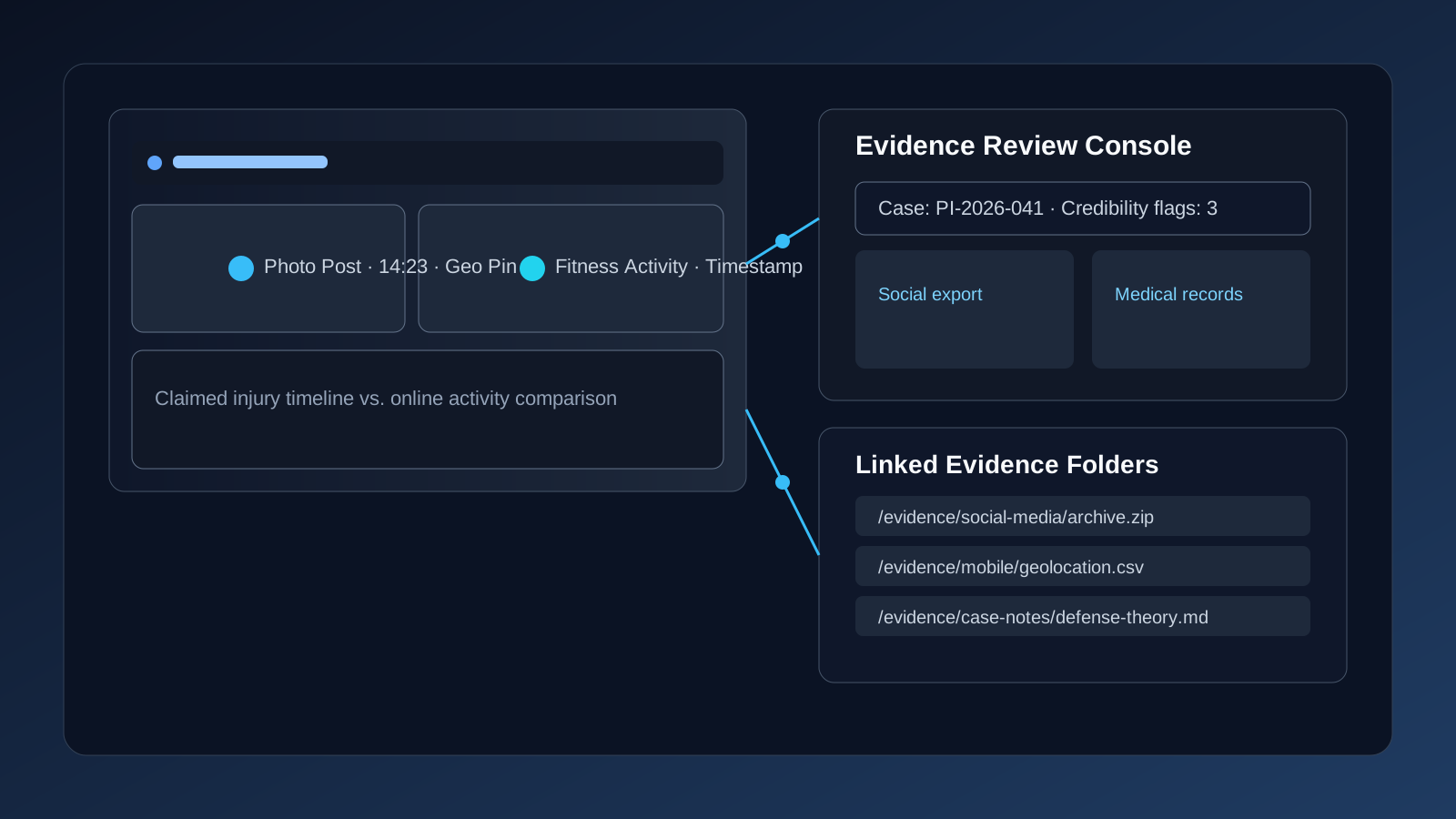
Many social platforms attach metadata to posts, including timestamps and location coordinates. When combined with smartphone data or rideshare records, this information can reconstruct a claimant’s movements with surprising accuracy.
Litigation teams may analyze metadata to:
- Establish timelines of physical activity
- Identify discrepancies between testimony and location data
- Correlate posts with medical appointments or recovery periods
The analytical complexity of this evidence increasingly requires specialized digital review tools.
Third-Party Content and Tagging
Even when plaintiffs limit their own social media activity, friends or family members may post photos or comments that include them. Tagged content often appears in discovery because it remains publicly accessible or can be obtained through subpoena.
Common examples include:
- Group photos from events
- Tagged vacation images
- Comments describing physical activity
Because the claimant does not control these posts, they often become unexpected evidence in litigation.
Discovery Obligations and Legal Standards
Courts generally treat social media content like any other form of electronically stored information (ESI). Once litigation becomes reasonably foreseeable, parties have a duty to preserve relevant digital evidence.
For plaintiffs, this means:
- Deleting posts after filing a claim may be considered spoliation
- Attempting to conceal social media activity can trigger sanctions
- Courts may order production of archived content, even from private accounts
Several high-profile rulings have confirmed that private social media posts are discoverable if they are relevant to the case. Judges often require claimants to provide account archives or allow forensic review of their profiles.
Attorneys therefore face a delicate balance: advising clients to avoid harmful social media activity while ensuring compliance with preservation obligations.
Strategic Guidance for Plaintiffs’ Attorneys
Experienced personal injury attorneys increasingly incorporate digital-footprint management into their litigation strategy. This typically involves proactive client counseling and structured evidence monitoring.
Key practices include:
Early Client Education
Clients should receive clear instructions immediately after representation begins. These instructions typically include:
- Avoid posting about the accident or injuries
- Refrain from sharing photographs showing physical activity
- Do not delete existing content related to the claim
Written guidelines help establish a defensible record if disputes arise during discovery.
Social Media Audits
Many law firms conduct an early review of a client’s public profiles. The objective is not to remove content but to understand what opposing counsel may discover.
This process helps attorneys identify potential credibility challenges and prepare appropriate explanations before deposition.
Litigation Hold Policies
When a claim becomes active, attorneys should implement a litigation hold covering social media content. This ensures that potentially relevant posts remain preserved and accessible during discovery.
Structured preservation also reduces the risk of accusations that evidence was intentionally destroyed.
How Legal-Tech Platforms Support Social Media Evidence Review
The volume and complexity of digital evidence have forced law firms to adopt specialized platforms for eDiscovery and litigation management. Social media data is rarely analyzed in isolation. Instead, it forms part of a broader dataset that may include emails, medical records, surveillance footage, and smartphone archives.
Enterprise litigation platforms enable legal teams to process this information at scale.
A widely used solution is Relativity, a platform designed for large-scale evidence review and digital investigation. Legal teams can analyze social media exports alongside other litigation records using advanced search and analytics features available through RelativityOne.
Key capabilities include:
- Structured evidence ingestion for social media archives and mobile device exports
- Metadata analysis to reconstruct timelines and activity patterns
- AI-assisted document review that identifies relevant evidence faster
- Version control and audit trails supporting defensible discovery processes
- Tech stack integration with litigation databases and case management systems
Although widely associated with eDiscovery, platforms like Relativity increasingly intersect with enterprise legal infrastructure. Large law firms and corporate legal departments integrate them with broader governance tools that include contract lifecycle management systems, compliance monitoring, and enterprise data retention frameworks.
This convergence reflects the broader pressure facing legal teams in 2026: delivering litigation outcomes under flat budgets while adopting secure AI workflows.
Enterprise Legal Operations Perspective
From a legal operations standpoint, social media evidence introduces two persistent challenges:
- Data volume and complexity
- Operational efficiency under budget pressure
Corporate legal departments and litigation support teams must process growing quantities of digital evidence without proportionally increasing staffing levels.
Enterprise legal technology helps address this gap by introducing automation and structured workflows.
Relevant capabilities include:
- Automated evidence classification using machine learning
- Integrated approval workflows for discovery decisions
- SOC 2–aligned security controls for sensitive litigation data
- Cross-system integration with enterprise tech stacks
Although often discussed in the context of contract governance, many of these capabilities mirror features found in the best enterprise CLM platform environments. Contract repositories rely on similar principles—version control, audit logging, structured review workflows, and secure data storage.
This architectural overlap explains why modern legal technology strategies increasingly treat litigation systems and CLM infrastructure as components of a unified legal operations stack.
Ethical and Compliance Considerations
Attorneys must also navigate ethical boundaries when advising clients about social media activity.
Professional responsibility rules generally prohibit lawyers from instructing clients to delete evidence that may be relevant to litigation. However, attorneys can advise clients to adjust privacy settings or discontinue posting.
Key ethical principles include:
- Do not alter or destroy relevant evidence
- Maintain transparency in discovery responses
- Ensure that preserved data remains accessible
Failure to follow these principles can result in sanctions, adverse jury instructions, or reputational damage to the law firm.
The Growing Role of Digital Evidence in Injury Litigation
Social media evidence represents only one component of a broader digital evidence ecosystem. Modern personal injury cases often involve:
- Smartphone location data
- Fitness tracker activity logs
- Vehicle telematics records
- Dashcam footage
- Surveillance video
Each data source adds context to the claimant’s activities and physical capabilities.
For litigation teams, the challenge is not merely collecting this information but analyzing it efficiently. Enterprise evidence platforms and integrated legal-tech stacks have become essential infrastructure for firms handling high-volume litigation.
The intersection of digital evidence and legal technology will continue to shape how personal injury claims are investigated and defended. Claimants’ online activity has effectively become part of the evidentiary record—whether they intend it or not.
For attorneys, the strategic lesson is clear: digital footprint management is no longer an optional client advisory. It is a core component of modern litigation discipline.
Tools mentioned in this article
- RelativityOne — eDiscovery platform for scalable evidence ingestion, search, and review workflows.
- CaseGuard — redaction workflows for sensitive digital evidence and disclosure readiness.
- ShareFile — secure legal document transfer with access control and audit trail support.
FREE UPDATES
Get practical legal-tech updates (max 2 emails/month)
Receive new tool picks, category updates, and implementation tips. No spam. Unsubscribe anytime.
Educational content only. Not legal advice.